The point where you don’t wake up feeling refreshed and well-rested (if you’re lucky, it only happens once in a while). This could, of course, be related to certain late-night escapades. Unfortunately, it’s more often the case that back and neck complaints are the real culprits.
The best mattress for back and neck pain
To prevent back and neck pain, it is vital to sleep on a mattress that provides your body with proper support. If you already have complaints, this is just as important, as you certainly don't want them to get worse. Determining the best mattress for you isn't something that can be done in a heartbeat, because every body requires a different type of support. To decide which mattress is best for you, we first look at your sleeping position.
What type of sleeper are you?
Are you a back sleeper, a side sleeper, or a stomach sleeper? If you fall into the last category, we don’t have particularly great news for you. Sleeping on your stomach is definitely not an ideal position for your back and spine. The spine should lie in a straight line, and when you’re on your stomach, that is almost never the case. This puts a significant strain on your lower back. We advise stomach sleepers to try and change their sleeping position, though we know how difficult that can be.
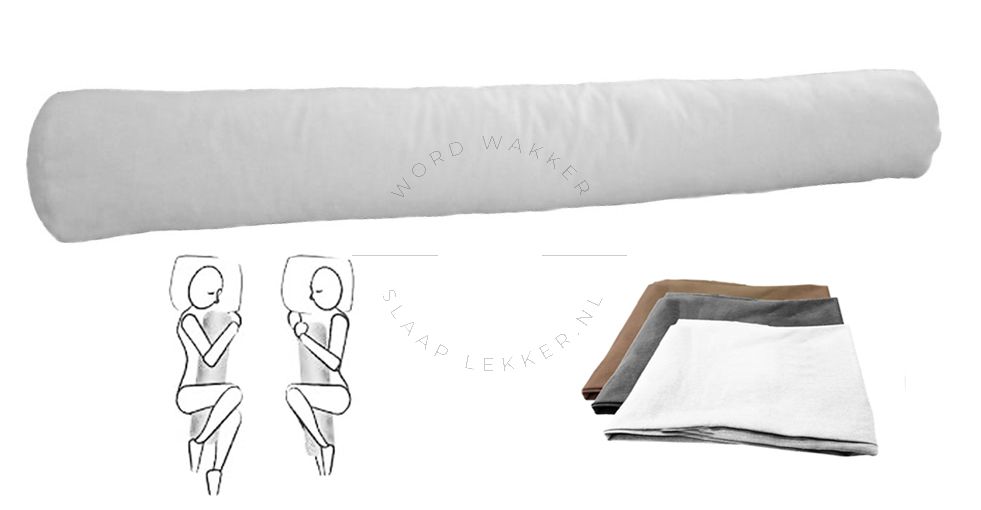
A helpful tool for this transition is a sleepmate. If you are a dedicated stomach sleeper and intend to stay that way, we recommend a firmer mattress with an open core that is highly breathable.
What is the best position for sleeping?
The spines of back and side sleepers have it a little easier. However, good support remains essential. The best sleeping position is one where the neck and back are in a neutral position. If we were making it a competition, we could congratulate the side sleepers, as the side position is generally the best. That is, unless you roll forward into a "twisted" side position, which is unfavorable for your back. Side sleepers also have it a bit easier in terms of choice. Practically any type of mattress is suitable, but do keep firmness in mind; if you sink too deep into the mattress, the gap between your head and shoulders can become too large, causing tension in your neck. Is this happening to you? Then we recommend a new pillow to perfectly fill that space.
Is sleeping on your back good?
Finally, the back sleepers. For these "ceiling-gazers," it’s important that the natural S-curve of your body is supported throughout the night. To provide your lower back with the right support, you can choose from various mattresses. Great options include the pocket spring mattress and a cold foam mattress. Both offer perfect support and comfort and are available in various firmness levels.
How can you best sleep with back pain?
Despite all this, there are many opinions on the best sleeping position. Some say back sleeping is superior, while others swear by side sleeping. Ultimately, the "theoretical" best position doesn't matter much because changing your preferred habit isn't easy and might even be impossible for many. Therefore, you must identify your preferred position and use that as your starting point. Then comes the moment to take a critical look at your current mattress and pillow. If they are due for replacement, do yourself a favor and buy a new mattress that offers the support your body so desperately needs. When a mattress or pillow has reached the end of its lifespan (aim for about 10 years for a mattress and roughly 5 years for a pillow), it truly impacts the quality of your sleep.
Pocket Springs and the Air Mattress
When dealing with back and neck complaints, the focus should always be on the supportive qualities of the mattress. We’d like to highlight two specific options. First, the pocket spring mattress. What characterizes a pocket spring mattress is its high degree of support and ventilating properties, largely due to the open structure of the material. This ensures you sleep on a wonderfully fresh surface! Second, there is the Matrair air mattress.
This orthopedic mattress offers all the requirements for a restorative night's rest. The mattress features an air core, which you can adjust yourself with a remote control to make it firmer or softer. This ensures you always have the exact setting and perfect support for your body.
What to do about tossing and turning?
Are you a restless sleeper? We love using this term, as it perfectly describes someone who cannot lie still and spends the night tossing, turning, and moving. If this is you, our first advice is to buy an occasional gift for your partner, as this can be quite irritating for them! While we want to advise you, it’s difficult because you are constantly changing positions. Furthermore, restlessness almost always has a cause stress being a very common one. Due to tension and stress, we lie uncomfortably and struggle to find a comfortable position.
Try to tackle the source of the tension. For example, put your smartphone away half an hour before bed; this helps you relax more easily. There are also countless sleep exercises worth trying. A very simple but effective exercise is focusing on your breathing. Take a relaxed position we recommend lying on your back in bed. Close your eyes and breathe in and out through your nose. Inhale for 4 seconds, hold for a moment, then exhale for 6 to 8 seconds, and hold again before starting the next breath. Doing this for a while will significantly lower your heart rate, reducing tension and promoting deep relaxation.
We could talk forever about mattresses and sleeping positions, but honestly, we've only scratched the surface. A good mattress is essential, but a pillow is just as important. What works for a side sleeper might be completely wrong for a back sleeper. So, before we become truly unstoppable, we’ll say for now: To be continued.