


Sleep Divorce: A Healthy Choice or the Beginning of the End?
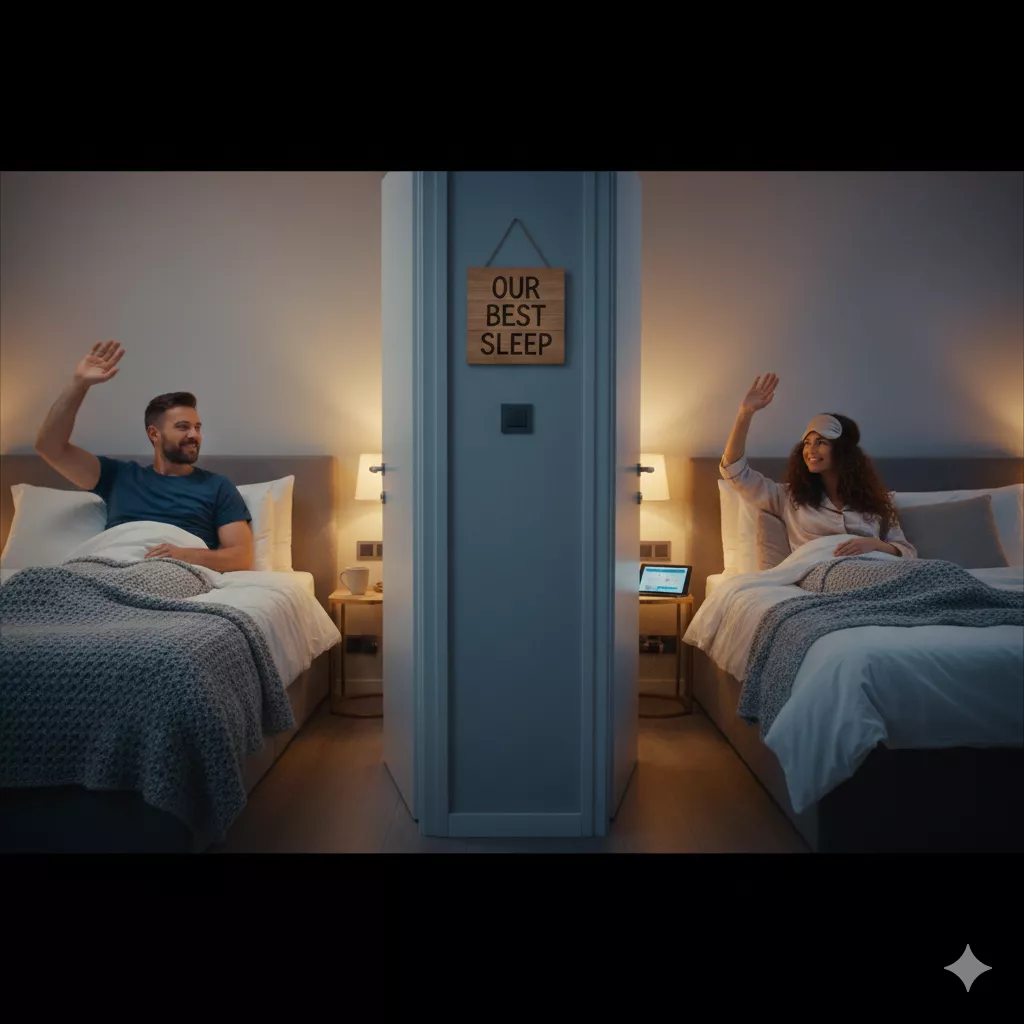
Do you sleep separately for a quieter night, yet feel the distance growing? Sleeping apart, also known as a 'sleep divorce', is a growing trend. For many people it’s the only way to get through the night, but without the right approach it can slowly erode the emotional foundation of your relationship.
Why Sleeping Apart Can Save Your Relationship
During menopause and andropause, night-time physiology changes. Snoring, hot flushes, restlessness and different sleep rhythms can lead to chronic sleep deprivation.
Cortisol management: A good night’s sleep is the most powerful way to reduce the stress hormone cortisol. Well-rested partners tend to have more patience and empathy for one another.
Temperature and calm: Especially during menopause, having your own sleep environment can be essential for uninterrupted deep sleep.
Quality over quantity: By sleeping apart, you choose physical recovery, which lays the groundwork for more positive interaction during the day.
Sleep is not only a physical necessity, but the place where you sleep is often also the place of emotional connection and closeness. When that routine disappears, both your body and mind respond. Frustration and misunderstanding can creep in, and relationships often come under even more pressure. Read on below the products for more insight and depth into what can happen when you decide to sleep apart, and download our practical guide: 'Surviving the Sleep Divorce'.


-
Page
-
Page
The Other Side: Why a 'Sleep Divorce' Can Be Relationship-Killing
Even if the rational part of you chooses rest, your biology doesn’t understand the absence of your partner. Ignoring the physiological effects of sleeping apart is often why relationships cool down. The biggest risk is oxytocin hunger. When night-time closeness disappears, the brain registers a lack of safety, which increases vigilance in the amygdala (the fear centre).
The Epicentre of Comfort: The Chest Area
To survive a sleep divorce, we need to understand why we miss our partner’s closeness so deeply. This revolves primarily around the chest area. This isn’t coincidence, but a deeply rooted biological mechanism that goes back to the very first minutes of life.
The Biological Memory of Safety
The chest is where nourishment, warmth and survival come together. For the brain, the chest is the physical representation of a “safe haven”. When a man rests his head on his partner’s chest, the amygdala is soothed almost immediately. It’s the one place on the body where you can literally hear and feel another person’s heartbeat, which sends a powerful signal of “presence”.
Heart-Rate Synchronisation and Cortisol
Research suggests that partners who make physical contact via the chest area can synchronise their heart rate (physiological linkage). This nudges the nervous system out of ‘fight-or-flight’ mode. The drop in the stress hormone cortisol can be measured directly.
The Oxytocin Fast Lane
The skin across the chest area is rich in specific nerve receptors that are directly connected to the brain regions responsible for producing oxytocin. This hormone is the enemy of fear and the engine of connection. In a sleep divorce, seeking out chest-to-chest contact during the day becomes essential to maintain emotional security. It’s a vital human need for emotional stability.
Conclusion: Protect Your Sleep and Your Relationship
Before you move into the spare room for good, it’s worth considering these physiological “buffers”. The goal is to minimise disturbance and maximise a sense of safety. By investing in the right materials and tools, you give your relationship the chance to spend the night together without compromising your health.
How Do You Survive a Sleep Divorce?
5 Strategies to Preserve Emotional Closeness
If you choose to sleep apart, you’ll need to actively “top up” your hormonal connection during the day and in the evening.
- The Golden Quarter-Hour: Spend the last 15–20 minutes before sleep together in one bed. Focus on skin-to-skin contact and a heartbeat meditation.
- The 20-Second Rule: Make up for night-time distance during the day with long hugs. This helps keep oxytocin levels steady.
- Hormonal Communication: Talk about your needs through the lens of biology. Don’t say, “I feel lonely,” but: “My body misses our closeness, let’s recharge for a moment.”
- The Morning Reunion: Find each other right after waking. A quick morning cuddle can reset cortisol levels for the rest of the day.
- Focus on the Safe Haven: Recognise that the chest can be a crucial place for stress reduction for many men. Make space for this during the day, without sexual expectations.
I (still) don’t want to sleep separately
Sometimes sleeping separately isn’t the only route to a good night’s sleep. Before you take the step towards separate rooms, there are innovative ways to eliminate sleep disruption caused by your partner. By adjusting the physical sleeping environment, you can preserve the biological sense of safety that comes with sleeping together, without the downsides of each other’s sleep habits.
1. The Danish Sleep Method: Two Duvets, One Bed
One of the biggest sources of unrest is the “battle” for the duvet or differences in temperature needs between partners.
- Individual temperature regulation: By choosing two separate duvets on one mattress, you create your own microclimate. One person can opt for a thick down duvet, while the other sleeps under a light cotton sheet.
- No transfer of movement: You’re no longer bothered by a partner pulling the duvet away or tossing and turning, which keeps cortisol levels (stress) low throughout the night.
2. The Wool Underblanket: Nature’s Thermostat
Temperature fluctuations, especially during the menopause transition, are a killer for sleep quality.
- Moisture and heat balance: A wool underblanket acts like natural air conditioning. Wool absorbs moisture and regulates warmth, so you’re less affected by the “radiant heat” of a warm partner. This helps keep your heart rate calm and allows you to stay deeper in REM sleep.
3. Anti-snoring Mouthguard and White Noise: The Sound Barrier
Noise disturbance is the number one reason for a “sleep divorce”.
- The anti-snoring mouthguard (MRA): Instead of fleeing to the sofa, an anti-snoring mouthguard can tackle the cause at the source. It keeps the airways open, which not only gives the partner peace, but also gives the snorer more oxygen and deeper sleep.
- White Noise Machine: For light sleepers, a white noise machine can work wonders. The constant, gentle sound masks a partner’s breathing or movement, so your amygdala (the brain’s fear centre) doesn’t switch “on” with every little noise.
4. Sleep Earbuds and Bluetooth Sleep Masks
For the light sleeper who is bothered by a partner’s noise (snoring or tossing and turning) or by light (reading or watching TV).
- Soft sleep headsets: These are often headbands with ultra-thin speakers. They mask sound with calming tones without the discomfort of hard earbuds in your ear.
- Sleep earplugs: These help you create your own “sound bubble”. You won’t hear your partner, while still staying physically close for oxytocin production.
5. Side-sleeper Pillow (Body Pillows) as a Barrier
Tossing and turning is often why the other person wakes up from physical contact at the wrong moment.
- A large body pillow (side-sleeper pillow) placed between partners provides a soft barrier. It prevents you from accidentally kicking or touching each other, while still sleeping in the same bed.
6. Anti-snore Pillows (Positional Therapy)
Many people only snore when lying on their back.
- Anti-snore pillow: Some pillows detect when someone snores and then gently change shape (for example by inflating) so the snorer turns their head.
- Positional trainer: A simpler solution is a positional trainer that encourages side-sleeping. This removes the source of the noise disturbance without needing surgery or a mouthguard.
7. Separate Beds in One Room: The Golden Middle Ground
If a shared mattress creates too many stimuli, you can choose two separate beds pushed together. If needed, use a “love bridge” (gap filler) to close the space, but opt for separate fitted sheets. This means you barely feel each other’s movements.
- Preserving closeness: You keep the option for the “Golden Quarter” and the heart-rate meditation before sleep, but you won’t be bothered by vibrations when the other person turns over.
Practical solutions for sleep disturbance
| Category | Solution / Tool | Specifically for... | Biological benefit |
|---|---|---|---|
| Temperature | Danish Sleep Method (2 duvets) | Different warmth needs & duvet pulling | Individual microclimate; lower cortisol. |
| Temperature | Wool underblanket | Night sweats & partner’s radiant heat | Natural moisture regulation & stable heart rate. |
| Noise | Anti-snoring mouthguard (MRA) | Heavy snoring / mild sleep apnoea | Open airways; uninterrupted REM sleep. |
| Noise | White Noise Machine / Bluetooth Headset | Light sleepers & partner noise | Auditory privacy; masks wake triggers. |
| Movement | Separate Mattresses / Side-sleeper pillow | Tossing, turning & jolts in bed | Eliminates movement transfer through the base. |
| Posture | Anti-snore pillow (positional therapy) | Back sleepers who snore | Encourages side-sleeping without waking. |
| Psychology | Scent anchors (T-shirt/Pillowcase) | Restlessness when (temporarily) sleeping separately | Soothes the amygdala via the limbic system. |
Summary of the solution strategy
- Eliminate noise: Use an anti-snoring mouthguard to address the source, or white noise for the receiver.
- Manage temperature: Switch to wool or active cooling to prevent “heat flight”.
- Stop movement: Choose separate mattresses and duvets within one frame.
- Stay connected: Use these tools to remain in the same room, or use scent anchors if sleeping separately is the only option for recovery.
Frequently asked questions about sleeping separately - sleep divorce
Is it really effective to use two separate duvets in one bed?
Yes, this is known as the “Danish Sleep Method”. It’s one of the most effective ways to prevent a sleep divorce. It eliminates the battle for the duvet and allows both partners to regulate their own temperature (for example, a cooling duvet for a woman in menopause transition and a warm duvet for a man). You keep the closeness, but remove the physical irritation.
How does a wool underblanket help if my partner is always too warm?
Wool is a natural thermostat. Unlike synthetic materials, wool absorbs moisture and releases heat. A wool underblanket creates a dry, stable temperature zone. This prevents your partner’s heat from “radiating” towards you, helping you both sleep more calmly without overheating.
Does white noise also work against heavy snoring?
White noise (or “brown noise”) masks sounds by creating a constant wall of soft sound. With extremely heavy snoring, a white noise machine is often an addition to other aids, such as an anti-snoring mouthguard. It mainly helps to flatten the “peaks” in the sound, so your amygdala (the brain’s fear centre) doesn’t keep sending an alarm signal with every snore.
What is the benefit of two separate beds pushed together (twin beds)?
This is the ideal middle-ground solution. You won’t be disturbed by your partner’s movements (turning and tossing) because the mattresses and bases are separated, but you can still hold hands or cuddle for the heart-rate meditation. It offers the physical privacy of a sleep divorce with the emotional safety of sleeping together.
Can an anti-snoring mouthguard (MRA) really save a relationship?
Absolutely. Noise disturbance is the number one reason couples move into separate rooms. An anti-snoring mouthguard addresses the problem at the source by keeping the airways open. This not only improves the partner’s rest, but also helps the snorer sleep deeper and more healthily, which supports overall mood during the day.
Does a body pillow really help with a restless sleeper?
Yes, it acts as a “buffer zone”. It absorbs jolts from tossing and turning and prevents direct skin contact that can pull a light sleeper out of deep sleep.
Why would I choose separate mattresses instead of one large one?
With one large mattress, vibrations from turning over travel through the entire core. With two separate mattresses, the vibration stops at the edge of the mattress, allowing the partner to sleep on undisturbed.
Can sleeping separately actually strengthen the relationship?
Yes, provided you acknowledge the downside. By consciously seeking chest contact and closeness during the day, you combine a good night’s sleep with the necessary hormonal bonding.
Why do I feel restless or frustrated when we sleep separately?
You’re experiencing “oxytocin hunger”. Your brain perceives the physical separation as a break in the social bond, which activates survival mode. This shows up as irritability.
Why is the chest area so important?
The chest area is the most powerful tool for stress regulation. This has nothing to do with lust, and everything to do with physiological regulation.
Is the need for chest contact lower if I haven’t breastfed?
No. The association with safety is anchored in our DNA. It’s about the combination of skin-to-skin contact, warmth and closeness to the heartbeat.
Is the chest area also important if sexual drive is lower?
Even more so. The chest area is primarily an organ for bonding and safety. By separating the contact from sexual performance (especially during andropause/menopause transition), you create a deeper layer of intimacy.
Save your sleep and your relationship
Discover which buffers can save your shared bed.
1. What is the biggest disruptor in bed?
The Comfort Masterclass: Survive the Sleep Divorce
The guide to preserving hormonal and emotional synergy in a modern relationship.
When a couple decides to sleep separately, it’s often described as a “logistical solution”. Biologically, however, it’s a major intervention. Our nervous system is programmed to rely on the partner’s physical closeness for safety and recovery. This guide teaches you how to enjoy the benefits of a good night’s sleep, without the biological “death blow” of emotional detachment.
1. The Neurological Conflict: Logic vs Instinct
Your logical mind chooses a separate bed because of snoring or menopause, but your primal brain doesn’t understand this.
- The mechanism: Throughout the night, our senses (smell, hearing, warmth) constantly scan to check whether our partner is still there. When that input is missing, the amygdala (the alarm system) remains in a state of mild alertness.
- The guide insight: Chronic frustration in the man, or restlessness in the woman, is often the result of a “hypervigilant brain” that never fully enters deep recovery mode because the “protector” or “safe harbour” is physically absent.
- Practical action: Use scent anchors. Your partner’s scent (via a worn T-shirt or pillowcase) activates the limbic system and sends a neurological signal of safety, lowering vigilance.
2. The Chest Area as “Biological Medicine”
The chest area is the most powerful tool for stress regulation. This has nothing to do with lust, and everything to do with physiological regulation.
- Scientific depth: The chest houses the heartbeat and is rich in CT afferents (nerve fibres that respond exclusively to gentle skin-to-skin contact). Stimulating them sends a direct signal to the hypothalamus to stop cortisol production.
- Heart-rate synchronisation: When a man rests his head on a woman’s chest, “physiological coupling” occurs. After 5 to 15 minutes, both partners’ heart-rate variability (HRV) begins to resemble each other’s.
- Practical action: Make the chest area a safe haven. Set aside moments during the day when the man can literally “dock” with his partner to reset cortisol levels. This is essential for neutralising the frustration of night-time isolation.
3. Hormonal Balance During Menopause and Andropause
During hormonal transition (menopause/andropause), the nervous system becomes more fragile.
- The woman: Falling oestrogen can lead to a feeling of physical detachment. Reclaiming the chest area as a place of comfort restores her sense of feminine value.
- The man: Falling testosterone makes him more sensitive to stress. His partner’s chest is the one place where he can switch off “fight mode” without losing face.
- Practical action: Apply the 20-second rule three times a day. A 20-second hug is the critical threshold at which an oxytocin surge breaks through cortisol dominance.
4. The Daily Schedule for “Sleep Divorce” Partners
Because the automatic closeness of the night disappears, intimacy has to be managed proactively.
| Time | Action (The Intervention) | Neurological effect | Goal |
|---|---|---|---|
| 07:00 | The Morning Reunion (10 minutes in bed) | Cortisol reset & oxytocin boost | Breaks night-time isolation |
| During the day | The 6-second kiss / micro-touch | Dopamine release | Reinforces the emotional bond |
| 18:00 | The 20-second hug | Lowered blood pressure & vagus stimulation | Decompression after the workday |
| 22:00 | The Golden Quarter (heart-rate meditation) | Physiological linkage (heart-rate sync) | A sense of safety before separating |
| During the night | Scent anchors (partner’s T-shirt/pillow) | Limbic system calming | Soothes the amygdala in their absence |