


The Physics of
Spinal Alignment
Spinal alignment is a dynamic biomechanical state. The transition to REM sleep involves skeletal muscle atonia, shifting the entire burden of skeletal support from active musculature to the passive mechanics of the mattress and pillow.
01. Support Dynamics Across Sleep Phases
External Support Load Matrix
As sleep deepens, the body's internal "postural tone" goes offline. This data maps the increasing reliance on external support during states of profound atonia.
02. Positional Biomechanics
Gravity exerts unique vectors of force depending on your orientation. Select a position to see how it interacts with spinal geometry.
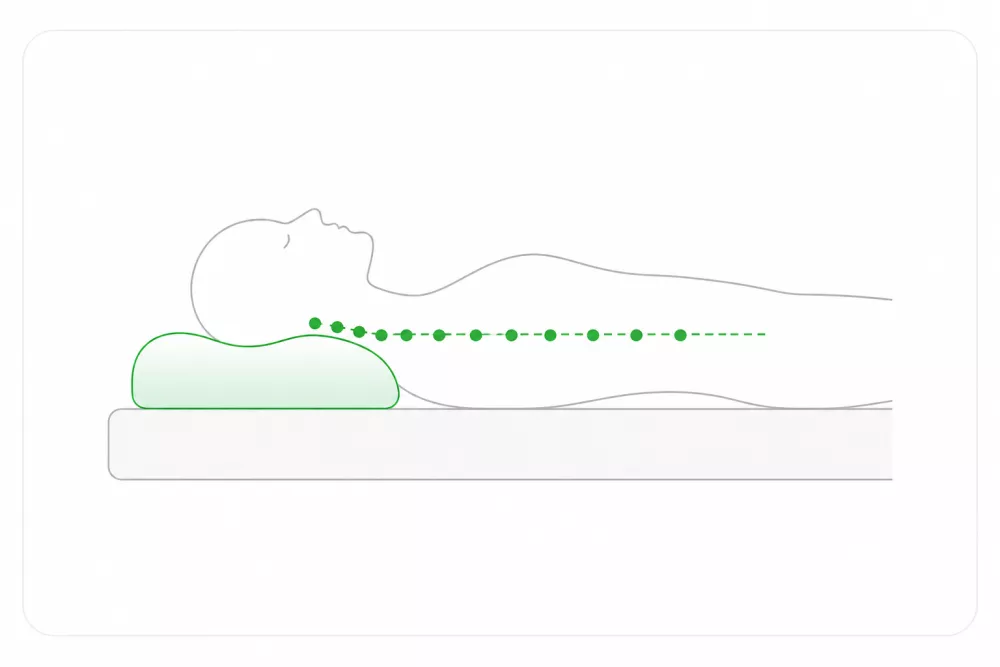
Supine (Back)

Lateral (Side)

Prone (Stomach)
03. Regional Implications & Ligamentous Creep
When muscles relax in deep sleep, your soft tissues undergo "Creep"—a slow deformation under constant load. This is the primary driver of chronic waking stiffness.
Cervical Spine
Sub-optimal loft causes facet joint imbrication. Nerve compression here is often mistaken for simple muscle tension.
Thoracic/Shoulder
Firm mattresses prevent shoulder immersion, "jacking" the upper spine and causing scapular winging.
Lumbar Creep
During N3 sleep, pelvic sinking stretches the lumbar ligaments. This "creep" is often worst at 4 AM.
04. Bedding Application & Material Physics
The Cervical Bridge
The biomechanical suspension of C1-C7 vertebrae over the physical gap created by shoulder width. Our specialized neck-support pillow is engineered for this exact push-back force required to maintain this bridge during REM atonia.
Thermal-Mechanical Sensitivity
As body heat transfers to visco-elastic materials (like memory foam), the material softens. An elite sleep environment must account for this "mechanical fade," ensuring consistent support over an 8-hour cycle.