...has certainly had their fair share of washing bedding. We are no exception. With the very first wave of the flu, our utility room would be overflowing again with duvets, covers, and fitted sheets. Fortunately, we were always well-prepared and had plenty of spares on hand, because running a wash in the middle of the night is a matter of pride for me (call it stubbornness).
Besides illness, a second reason for frequent washing in our house is bedwetting. With our youngest (who is just as headstrong as his mother), we tried everything to achieve dry nights. Unfortunately, so far without result. However, with three children who became dry at night very quickly, we know both sides of the spectrum. For many children, staying dry at night happens fairly quickly and easily. As a parent, you often dread the process because you never know exactly what to expect. But many parents who look back on it find that it wasn't as bad as they thought and went faster than they initially anticipated.
Most children begin to feel that their bladder is full around the age of 2. This is typically the age when they start indicating this during the day. It’s also the time when some children can go without a diaper during the day. During this transition, it can help to place a potty in the living room. When your child feels the urge to go, they only have a short distance to walk.
The night-time is often a bit trickier. At night, your child is less likely to feel this urge simply because they are in a deep sleep. That’s why we’ve put together a few tips to make the transition to dry nights as "seamless" as possible.
1. One last trip to the bathroom before bed
As you can imagine, it’s difficult for your child to hold it in if their bladder is very full. Therefore, always have your child go to the toilet right before sleeping. This minimizes the chance of an accident. It can also be very helpful to wake your child for a quick trip to the bathroom right before you go to bed yourself. In my experience, my son doesn't even remember me waking him up the next morning, meaning he (and I!) enjoyed a full night's sleep.
2. Explain what you expect from your child
It sounds logical, but explain that you would like the bed to stay dry. Children often really appreciate it when you voice this. It makes the goal clear for them. It is important to focus on what you DO expect, as the word "not" is often filtered out by young minds. Instead of saying, "I don't want you to wet the bed tonight," try saying, "It would be wonderful if the bed stays dry tonight." The first sentence keeps the focus on bedwetting, making the message less effective.
3. Emphasize the positive
Following the previous point, highlighting the positive is much more effective than focusing on what goes wrong. Punishment, in this case, is an absolute no-go. Punishing a child only makes them more insecure than they might already be. No matter how much frustration there is after the fourth night in a row of changing sheets, try to state what happened without emotion: "That’s a shame, sweetheart, but it’s completely okay." This might take some effort at 3:00 AM, but failing to do so may prolong the time it takes for your child to stay dry at night.
4. Rewards work!
If you notice that they are physically capable but just need a little extra motivation, a reward system can work wonders. You can find plenty of these "calendars" online to print out. Even better is creating one together with your child. By involving them letting them choose their own reward and how they get to mark each success (with a checkmark or a sticker) you create a ritual that makes saying goodbye to diapers easier and faster.
5. Ensure you have enough spare bedding
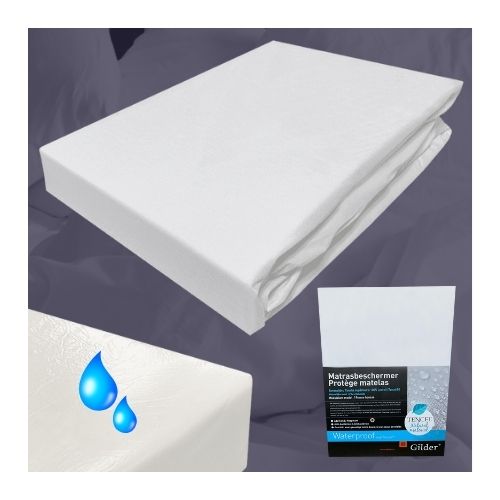
Finally, to make this transition as peaceful as possible for you, we advise having plenty of spare bedding. There is nothing more frustrating than scouring the house at night for the last dry fitted sheet, or scrubbing the mattress in the morning because it got soiled again. A waterproof mattress protector is a true lifesaver in this situation. They are easily washable and don't feel sweaty at all. Our protector features a waterproof PU layer on the bottom (which is highly breathable and washable up to 95°C), providing the ultimate protection for the mattress. The top layer is made of 100% cotton terry cloth.
The Tencel Bio fitted sheet: The gold standard!
Alternatively, you can choose the Tencel Bio fitted sheet. This one also features a polyurethane layer on the underside, which is elastic and breathable. It is moisture-proof but vapor-permeable. Unlike cheaper versions, this Tencel sheet contains unique PCM microcapsules that continuously regulate the temperature to a pleasant 28°C. Tencel fitted sheets are the absolute peak of hygienic and comfortable sleep. This way, you can sleep soundly knowing that a quick wash is all it takes to get everything fresh and clean again.
Sometimes it’s a matter of patience and persistence, but believe me, the moment will come when this is all behind you. You’ll wake up one morning and suddenly realize: "Hey, I slept through the night!" I promise!