


Bed Linen Essentials for a Clean Cosy Sleep Every Night
Sleeping under fresh, new bedding for the first time can feel incredibly comforting: the fresh scent, the soft touch of the fabric against your skin, and the way a new duvet cover can completely transform your bedroom. We offer an extensive range of bedding products, including duvet covers, fitted sheets, mattress protectors and much more. With us, you will find high-quality bedding available in a wide variety of colours, fabrics, designs and sizes.
What is Bedding?
Bedding includes all the products used to dress and protect your bed. This includes items such as duvet covers, sheets, mattress protectors , waterproof mattress protectors and pillowcases. We offer a complete bedding collection, combining excellent quality with affordable prices, and many products are available directly from stock.


-
Page
-
Page
Bedding, The best bedding deals
The right bedding is just as important for a good night’s sleep as a quality duvet, pillow and mattress. While one person gets truly excited about soft, smooth, cooling cotton sateen, another is happiest with a warm flannel duvet cover. Of course, this can also vary by season. With high-quality bedding, you will always sleep better. A pilling fitted sheet can keep you annoyingly awake. A duvet cover made from synthetic fibres (= plastic) can make you sweat heavily (because the heat has nowhere to go). A deep, restorative sleep becomes difficult to achieve, so you often wake up tired and not refreshed in the morning. Invest in a good night’s sleep and your sleep comfort.
Buy bedding
Buying bedding is easy online at Weids Living & Sleeping. Yes, you can buy bedding anywhere. Bedding from HEMA, bedding from IKEA, bedding from Action, yes, of course you can buy bedding there too, but as mentioned, please pay close attention to the quality of the material on offer. Bedding made from natural fibres such as cotton, bamboo and Tencel can make a real difference to your sleep. These fabrics are highly breathable and regulate both moisture and temperature very effectively. That last point means that excess heat is carried away easily, while warmth can also be retained well when needed.
This is why we always recommend choosing bedding made from these natural fibres and not synthetic materials. Synthetics hardly breathe, which can leave you waking up feeling clammy and sweaty. Synthetic materials also do not conduct heat well, so you can end up feeling too cold or too hot very quickly.
What is good bedding?
Most bedding is made from cotton (percale cotton, cotton sateen), flannel, bamboo, Tencel and silk. The first four are all types of cotton; only the weave of the bedding differs. Percale cotton creases far less than regular cotton and also feels much softer and more supple. Cotton sateen is known for its smooth feel and luxurious look. Flannel is wonderfully warm and beautifully soft for cold winter nights. Bamboo and Tencel have exceptionally high moisture absorption, with Tencel standing out in particular, plus Tencel is also very strong and silky-soft! And silk—well, silk. Nothing truly compares to silk; everyone has an image of it and is either a fan or not. Silk is, however, an expensive fabric and therefore not accessible to everyone. In that case, Tencel and cotton sateen are beautiful and affordable alternatives. Each fabric has its own specific characteristics and unique properties.
Material comparison: Find the perfect bedding for your sleep style
Not all bedding is the same. The choice between cotton, linen or Tencel™ determines not only how your bed looks, but also how effectively your body regulates temperature during the night. Whether you are a ‘hot sleeper’ craving cooling comfort, or you love the hotel-luxury feel of smooth sheets, the table below helps you choose based on texture, breathability and ease of care.
| Material | Feel on the skin | Ventilation | Moisture absorption | Ironing needed? |
|---|---|---|---|---|
| Percale cotton | Soft & cool | Excellent | Average | Yes (for a crisp look) |
| Cotton sateen | Smooth & supple | Good | Average | No (wrinkle-recovering) |
| Linen | Textured & airy | Maximum | Very high | No (it’s meant to crease) |
| Flannel | Super soft | Good | Very good | No |
| Bamboo | Supple & soft | Very good | Very high | Light ironing |
| Tencel | Silky-soft & smooth | Very good | Extremely high | No |
| Silk | Smooth & supple | Very good | Extremely high | No |
The best bedding for the best night’s sleep
As well as looking beautiful, bedding has a very clear purpose: protecting your duvet, mattress and pillow and helping to extend their lifespan. But don’t forget that comfortable, high-quality bedding is also essential for great sleep comfort and a truly good night’s rest. So don’t cut corners on your bedding. Treat yourself to quality! Your body, your skin and your well-rested mind will thank you for it!
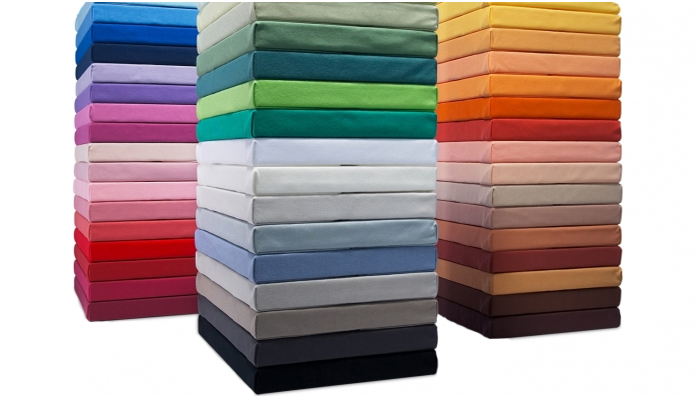

The Complete Bedding Guide: From Mattress to Decoration
Use the table below to quickly find the right base layer or decorative layer for your bed setup. This guide helps you navigate the different terms and functions.
| Type of bedding | Function | Suitable for… | Notes |
|---|---|---|---|
| Duvet cover | Basic protection & comfort | Duvets and blankets | Look for a tuck-in flap for extra comfort. |
| Fitted sheet | Basic protection & comfort | Standard mattress (up to approx. 30 cm) | Elasticated corners |
| Split fitted sheet | Mobility for double beds | Adjustable mattresses | Has a split opening at the top |
| Topper fitted sheet | Perfect fit for a thin mattress | Toppers (5–12 cm) | Low corners help prevent wrinkles |
| Topper split fitted sheet | Flexibility for toppers | Adjustable toppers | Designed for luxury box springs |
| Molton fitted sheet | Moisture absorption & hygiene | Under the regular sheet | Protects the mattress from sweat |
| Flat sheet | Traditional middle layer | Under a blanket / summer | No elastic, easy to tuck in |
| Blanket | Source of warmth & insulation | Over a flat sheet | Often made of wool or cotton |
| Throw | Decoration & quick warmth | Foot of the bed or sofa | Compact size, ideal as an accent |
| Bedspread | Aesthetics & full coverage | Full bed cover | Creates a crisp hotel look |
Expert tip: Always combine a molton with a fitted sheet of your choice to maximise mattress hygiene. For a split topper, a dedicated split fitted sheet is essential to keep each side independently adjustable.
Buy your bedding at Weids Living & Sleeping
On average, we spend ⅓ of our time asleep. That is why it is very important to protect your mattress, pillow and duvet properly. With our bedding, you are assured of the highest quality bedding at a low price. Invest in the right bedding so you can enjoy your bed and accessories for years to come.
Frequently asked questions about bedding
What is the best bedding for people who get warm quickly?
For the best cooling effect, choose natural, breathable materials with an open weave. In 2026, the absolute favourites are:
- Linen: Offers the highest level of ventilation and absorbs moisture exceptionally well.
- Percale cotton: A matte, “crisp” weave that feels cool against the skin.
- Bamboo viscose: Naturally temperature-regulating and silky-soft, ideal for sensitive skin.
- Tencel (Lyocell): A sustainable alternative that absorbs 50% more moisture than cotton.
What is the difference between cotton sateen and percale cotton?
The difference lies in the weave, not the fibre.
- Cotton sateen: Woven using a “four-over-one” technique, giving the fabric a subtle sheen, a smooth drape and a warm, luxurious feel.
- Percale cotton: Uses a “one-over-one” weave, resulting in a sturdy, matte fabric that breathes very well and stays cool.
How do I choose the right fitted sheet size for a 180x210 bed (2026 standard)?
Now that 180x210 cm beds are becoming the new standard, fit is crucial.
- Standard mattress: Choose a 180x210 cm fitted sheet with a corner depth of 30 cm.
- Topper: Use a dedicated topper fitted sheet (corner depth 10–15 cm) to prevent excess fabric and wrinkles.
- Split topper: For electrically adjustable beds, you need a fitted sheet with a split at the top.
What does “Thread Count” really say about quality?
Thread Count (TC) is the number of threads per square inch. Although many people assume “higher is better”, the quality of the yarn matters more.
- 200–400 TC: Ideal for everyday use; durable and breathable.
- > 600 TC: Often heavier and less breathable. Watch out for “multi-ply” marketing tricks where thin threads are twisted together to artificially inflate the number.
How can I recognise truly sustainable bedding?
Look out for certifications such as:
- GOTS (Global Organic Textile Standard): Guarantees organic status and socially responsible production.
- OEKO-TEX Standard 100: Tests for harmful substances and chemicals (safer for the skin).
What is the best bedding for a dust mite allergy?
For allergy-sensitive sleepers, anti-allergen bedding is essential. The focus should be on weave density and washability:
- Silk: A 100% natural protein fibre. It is hypoallergenic, helps the skin retain moisture, and reduces hair breakage thanks to minimal friction.
- Tencel: Tencel absorbs up to 150% more moisture than cotton. Its natural properties support hygiene and help limit bacterial growth. That is why a Tencel duvet cover is also considered hypoallergenic (anti-allergy).
Why does my duvet shift inside the duvet cover, and how can I fix it?
This often happens due to a mismatch in material or size.
- Solution (duvet clips/straps): These duvet straps attach easily to the duvet and the inside of the duvet cover, helping to keep everything in place even when you shake the duvet out.
- Solution (material friction): A smooth cotton sateen cover over a smooth synthetic duvet can slip more easily. Pair a smooth cover with a cotton or wool duvet for more grip.
- Solution (sizing): Make sure the duvet cover is exactly the same size as the duvet. A cover that is 10 cm too large creates empty corners.
Winter vs summer bedding: when should I switch?
- Above 20°C (summer): Choose linen or percale cotton. These fabrics are highly breathable and carry excess heat away quickly.
- Below 16°C (winter): Switch to flannel (brushed cotton). Flannel retains body heat thanks to raised fibres that create a small insulating layer of air.
How do I remove yellow stains from pillowcases and sheets?
Yellow stains are caused by a build-up of sweat, skin oils and skincare products.
- Prevention: Wash your face thoroughly before bed to reduce night-cream transfer.
- Treatment: Soak the bedding in a mixture of warm water and baking soda, or use an oxygen-based natural bleach (sodium percarbonate).
Avoid chlorine bleach: it can react with proteins in sweat, making stains even yellower and more permanent.